
Structure of Human Skin
The skin is the largest organ of the human body. Far from being a simple protective covering, it performs several essential functions:
- Physical and chemical barrier: it forms a dynamic interface between the internal organs and the external environment.
- Immune function: it continuously interacts with potentially harmful environmental agents.
- Sensory function: it receives external stimuli and transmits them to the nervous system while also mediating outgoing neural responses.
- Endocrine function: it synthesizes hormone-like substances and metabolizes hormones produced elsewhere in the body.
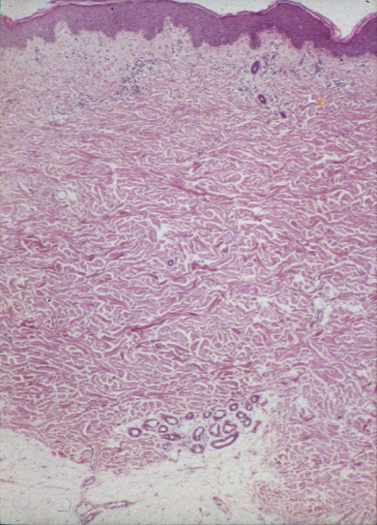
The epidermis consists of several layers of cells called keratinocytes. These cells are continuously generated in the deepest layer of the epidermis, adjacent to the dermis, and are gradually pushed towards the skin surface by newly formed keratinocytes. Their journey from the basal layer to the surface takes approximately 30–40 days. During this process, keratinocytes progressively lose their vital functions until they become flattened microscopic layers composed essentially of cell membranes.
This process is known as keratinization. The outermost layer of the epidermis, the stratum corneum, is formed by multiple layers of dead cells that are continuously shed in a process that is normally invisible to the naked eye.
The epidermis is separated from the dermis by the basement membrane, to which both basal keratinocytes and melanocytes (described below) are anchored.
Besides keratinocytes, the epidermis contains two additional cell types, although in much smaller numbers: Langerhans cells, which act as immune sentinels by recognizing potentially harmful agents, and melanocytes.
Melanocytes possess long cytoplasmic extensions known as dendrites, through which they establish contact with the surrounding keratinocytes. Each melanocyte forms a functional unit with approximately 40 keratinocytes, supplying them with its pigment, melanin.
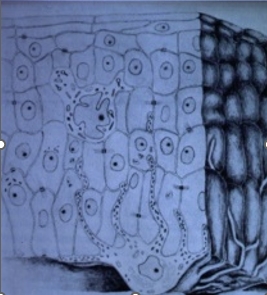
Melanocytes synthesize melanin, which is packaged into small granules and transferred through their dendrites to neighbouring keratinocytes. The amount of melanin produced is largely determined by genetic factors and is responsible for the natural colour of the skin, which may range from light to dark. However, melanin production increases in response to sun exposure, giving rise to the process commonly known as tanning.